
Call us
301-363-4651 (Available 9 a.m. to 5 p.m. CST from Monday to Friday)

| Code | CSB-RA010402A20acHU |
| Size | US$210 |
| Order now | |
| Image |
|
| Have Questions? | Leave a Message or Start an on-line Chat |
| Application | Recommended Dilution |
|---|---|
| WB | 1:5000-1:10000 |
| ICC | 1:50-1:500 |
| IF | 1:30-1:200 |
Histone H2B acetylation at lysine 20 represents a key epigenetic modification that influences chromatin accessibility and transcriptional regulation. This post-translational mark on Histone H2B type 1-B plays an important role in modulating gene expression programs, making it a valuable target for researchers investigating chromatin dynamics, epigenetic signaling, and nuclear processes.
This recombinant monoclonal antibody, generated from clone 21F11 in rabbit, offers the reproducibility that epigenetics research demands. Because the antibody sequence is defined and production is cell-line based, you can expect consistent performance across experiments and between lots, eliminating the variability that can complicate longitudinal studies or multi-site collaborations.
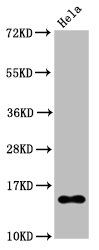
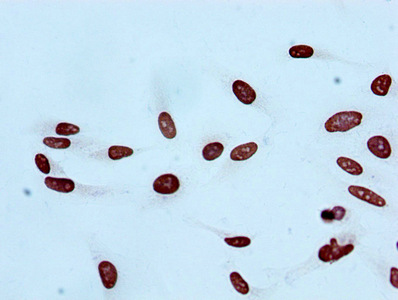
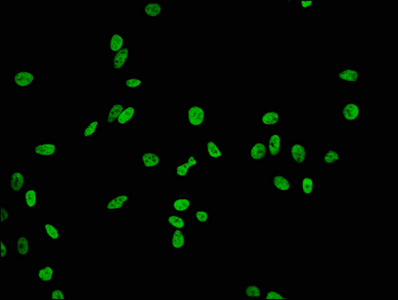
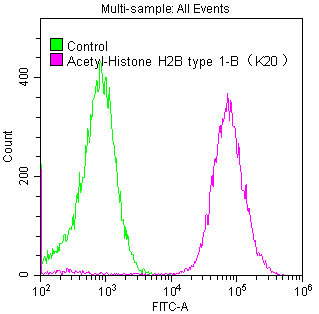
Validation data demonstrates reliable detection across multiple experimental platforms. In western blot applications, the antibody detects a band at the expected 15 kDa molecular weight in HeLa whole cell lysates treated with sodium butyrate, a histone deacetylase inhibitor that enriches acetylated histones. This confirmation of predicted band size reflects clean, specific target recognition. The antibody has also been validated for immunocytochemistry, immunofluorescence, and flow cytometry using HeLa cells, giving you flexibility to examine acetyl-H2B K20 distribution through complementary visualization approaches. Immunofluorescence staining with DAPI counterstaining confirms the expected nuclear localization pattern, while flow cytometry enables quantitative population-level analysis of this modification.
Supplied in a glycerol-containing buffer for stability, this affinity-purified antibody is well-suited for researchers exploring histone modifications, chromatin remodeling, and epigenetic mechanisms in human samples. Whether you're characterizing acetylation dynamics in response to HDAC inhibitors or mapping modification patterns across different cellular states, this antibody provides a dependable tool for your epigenetics workflow.
There are currently no reviews for this product.





